





Mouth breathing bypasses ALL the wonderful things that the nose does for us!
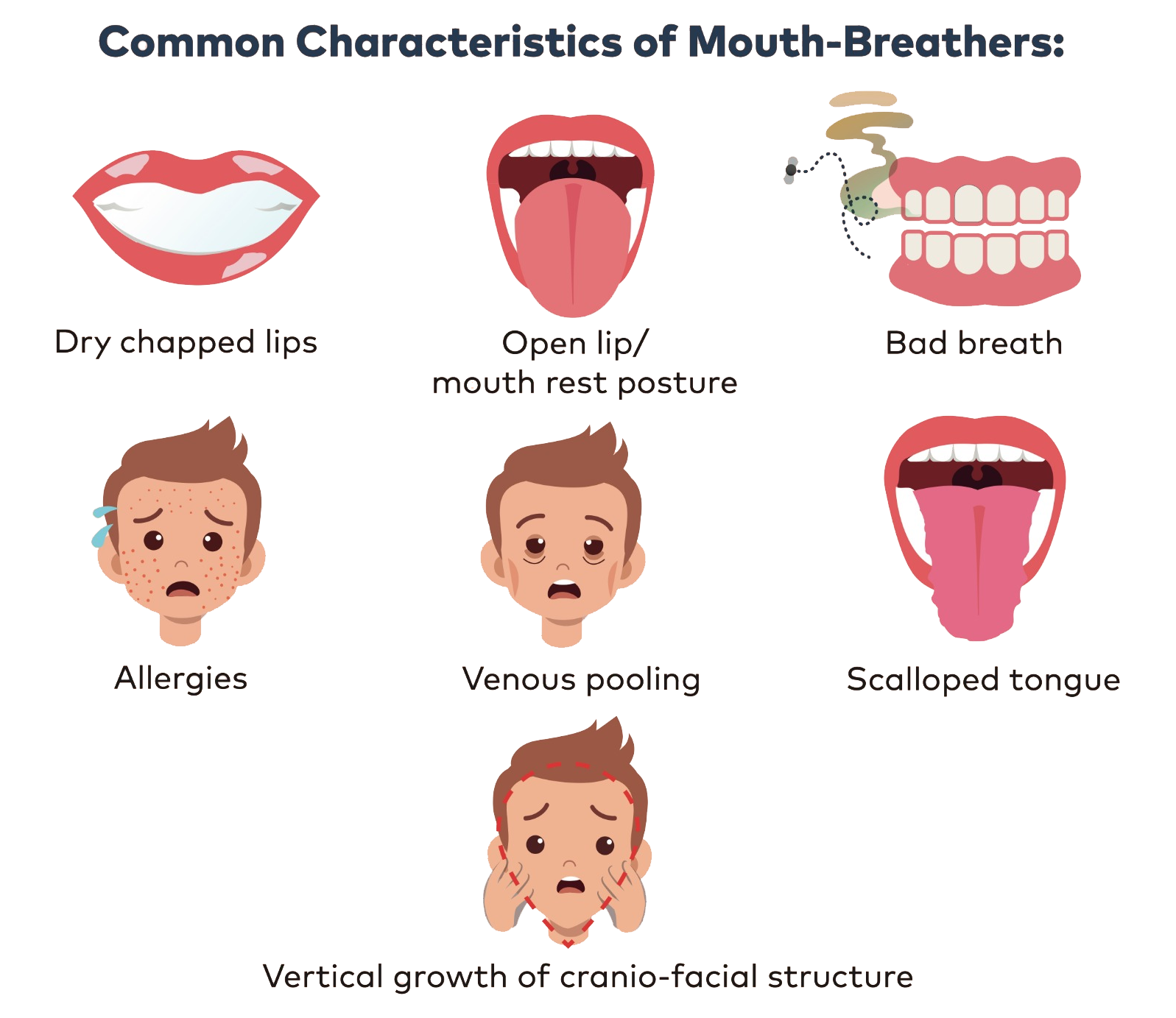
Mouth breathers will be inhaling unfiltered air, and because of this will quite often suffer from bad breath, asthma, higher allergy rates, tooth decay, gum disease, teeth or jaw abnormalities and sleep issues such as snoring and sleep apnoea.
Chronic mouth breathing in children can lead to facial deformities such as a long face, protruding or recessed chin or a high palate.
And because the air is untreated, when you mouth breathe you need a bigger volume than when you breathe through the nose.
The body starts to adapt to this different volume of air and different concentration of oxygen which causes a lot of changes in the body’s systems. One of those being that it can change the pH level in the blood and make it more acidic, increasing your predisposition to cancer as cancer cells grow more easily in an acidic environment.
An easy way to encourage nasal breathing in mouth breathers is to get them to put their tongue to the roof of the mouth and rest it behind the upper set of teeth. This is the tongues natural resting position and will act as a switch to "turn on" nasal breathing and encourage the mouth the close.
Mouth breathing, as opposed to nasal breathing, can have various health risks and implications. Here are some of the potential consequences:
1. Dry mouth: Breathing through the mouth tends to dry out the oral tissues, leading to a dry and uncomfortable sensation in the mouth. This can contribute to bad breath and an increased risk of dental problems, such as tooth decay and gum disease.
2. Reduced oxygen intake: Nasal breathing is the natural and optimal way to take in air. The nose acts as a filtration system, warming, humidifying, and filtering the air before it reaches the lungs. Mouth breathing bypasses these functions, resulting in less efficient oxygen intake. Reduced oxygen levels can affect overall health and may impact cognitive function, sleep quality, and energy levels.
3. Increased risk of respiratory infections: The nose acts as a barrier against airborne pathogens, filtering out dust, allergens, and microorganisms. Breathing through the mouth allows these particles to enter the respiratory system more easily, increasing the risk of respiratory infections, such as colds, flu, and sinusitis.
4. Orthodontic issues: Chronic mouth breathing, particularly during childhood, can lead to orthodontic problems and facial deformities. The constant flow of air through the mouth can affect the growth and development of the jaws and teeth, leading to malocclusions (misaligned bite) and overcrowding of teeth.
5. Sleep disturbances: Mouth breathing is commonly associated with sleep-disordered breathing, including conditions like snoring and sleep apnea. These conditions can disrupt sleep patterns, leading to daytime sleepiness, fatigue, and increased risk of cardiovascular problems.
6. Impaired facial development: In children, habitual mouth breathing can impact facial growth and development. It may lead to a long, narrow face, high arched palate, and a retruded or recessed chin. These changes can influence the appearance, function, and overall health of the individual.
7. Allergic reactions: Nasal breathing helps filter and reduce the allergens that enter the respiratory system. Mouth breathing bypasses this filtration mechanism, increasing the likelihood of allergic reactions in individuals with allergies or sensitivities.
If you or someone you know frequently breathes through the mouth and experiences any of these issues, it is advisable to consult a healthcare professional, such as a dentist, orthodontist, or ENT (Ear, Nose, and Throat) specialist, who can provide a proper diagnosis and recommend appropriate treatment options.